


Why Standing Water in a Double-Bowl Sink Points to a Specific Type of Line Restriction
A double-bowl kitchen sink seems simple on the surface. Water flows into either basin, drains through separate openings, and leaves the house through the same main line. Most homeowners never think about the way these bowls interact until both sides start filling at the same time. That moment usually feels like a sudden plumbing failure, but the truth sits deeper in the drain line. Standing water in both bowls rarely comes from a problem in the trap or garbage disposal. Instead, it points to a specific type of restriction in the shared branch leading to the main drain.
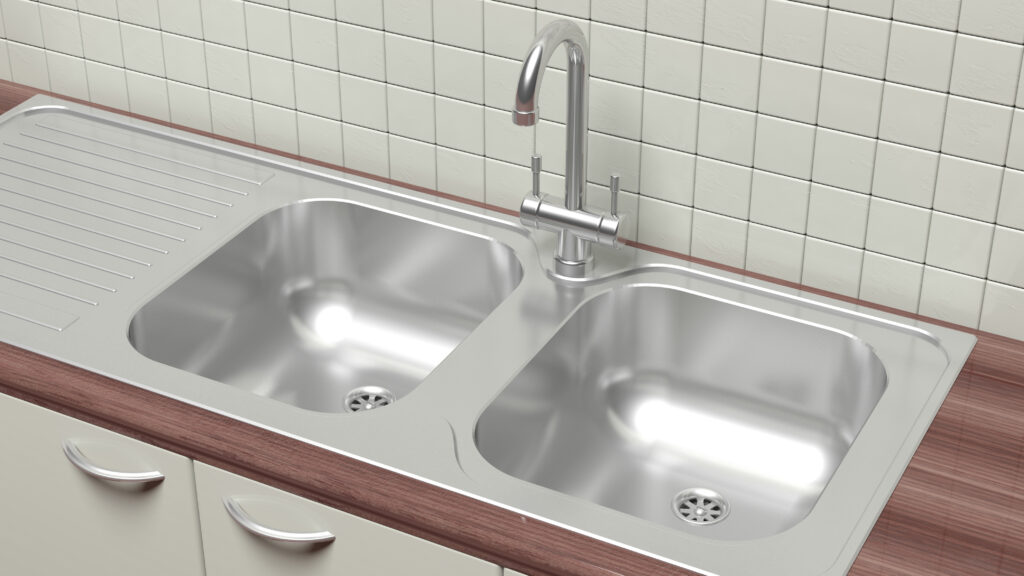
Homes around Orlando experience this far more than people expect. Heavy cooking, high humidity, warm water habits, and frequent food prep all push debris into the line. At first, the buildup stays quiet. Water drains a little slower, the disposal takes longer to clear, and the sink gurgles now and then. Then a weekend of cooking or a load of dishwasher water sends more debris down the line and the drain reacts by pushing water back into both bowls.
Understanding why this happens helps you avoid repeat backups and gives you a clear picture of what a proper repair should address.
Why a Double-Bowl Sink Exposes Hidden Restrictions Faster Than a Single-Bowl Sink
Both bowls connect to a single branch line that leads to the main drain. Each bowl drains fine on its own until that shared path starts to close. As the restriction grows, the system loses the ability to handle combined flow. When the main path narrows, water from one bowl has nowhere to go and rises into the other. That crossflow is the main clue that tells you where the blockage sits.
A single-bowl sink sends all water through one opening, so the early signs stay subtle. A double-bowl sink reacts quickly and shows the problem by filling both sides at once. People often blame the disposal, but the disposal usually just pushes debris forward. The real blockage sits deeper, often several feet from the sink.
This is why snaking the trap or replacing the disposal rarely solves anything. The line beyond the connection holds the restriction, and until someone clears that section, the problem keeps returning.
What Creates the Restriction in the Shared Kitchen Branch Line
Kitchen drains face a unique mix of debris. Grease, starch, soap film, food fibers, and disposal grindings all head down the line. Grease cools inside the pipe and turns sticky. Starch from rice, pasta, and potatoes thickens and hardens. Soap film forms a slick layer that grabs debris.
Orlando’s warm weather helps grease travel farther before it cools, so it sticks deeper inside the line. Once the buildup reaches the shared branch, the drain starts acting unpredictably. Water enters the line, hits the narrowing, slows down, and backs into whichever bowl stands closest to the restriction. Then the second bowl fills as pressure increases.
Older homes experience this even faster. Cast iron pipe walls grow rough as they age. Starch and grease cling to those rough surfaces immediately. Once the buildup forms a ridge, every new bit of debris latches on. The drain never clears fully again until the wall gets restored or refinished.
Why the Problem Always Appears as Standing Water Instead of a Sudden Blockage
Double-bowl sinks rarely go from perfect flow to zero flow in one day. The restriction grows slowly. You might notice the first signs weeks before the backup appears.
These early warning signals include:
• A bowl that drains more slowly than the other
• Water that rises in one bowl when the disposal runs
• Bubbles in the bowl closest to the dishwasher
• Gurgling noises after draining a pot of water
• A sour smell coming from under the sink
• Standing water after cleaning dishes
Each signal points to a partial blockage. The drain still moves water, but not at the speed it should. Once the restriction tightens just a little more, both bowls fill because they share the same path. The line cannot push water down fast enough, so it takes the only open direction: back upward.
How Dishwashers Make the Backup Worse and Faster
Many Orlando kitchens have dishwashers tied directly into the same drain branch. Dishwashers release water in strong bursts. Those bursts push food residue, detergent, and grease deeper into the shared line. When the restriction sits a few feet past the tie-in, the dishwasher sends that water backward into the sink instead of forward into the main drain.
That backflow surprises homeowners because it happens even when both bowls are empty. The dishwasher does not cause the problem. It only exposes a blockage that has already formed. Once the line narrows enough, every dishwasher cycle becomes a backup waiting to happen.
Why Cleaning Only the Trap Guarantees Another Backup
The trap under the sink holds small debris that falls straight through the drain opening. It does not control deeper flow. Many homeowners clean the trap every time they see standing water. The water might drain slightly faster for a day or two, but the deeper problem stays untouched.
Standing water in both bowls tells you the restriction sits beyond the trap, beyond the disposal, and beyond the first few feet of pipe. Only a full line cleaning that reaches the shared branch removes the buildup responsible for the backup.
Basic snaking gives temporary relief because it pokes a small tunnel through the buildup, but that tunnel narrows again as soon as the line carries more grease or food fibers. A proper repair must address the full diameter of the pipe wall.
How Professionals Remove the Restriction and Restore Real Flow
A proper fix starts with a camera inspection. The technician sends a camera into the line to identify buildup thickness, pipe abrasion, low spots, and any structural damage. Many Orlando kitchens sit on cast iron branches that grew rough over decades. The camera shows whether the line simply needs cleaning or whether refinishing helps long-term flow.
After mapping the restriction, the technician clears loose debris with high-pressure jetting. This breaks down grease, starch, soap film, and food buildup. If the line has rough cast iron edges, mechanical tools smooth the interior so debris no longer sticks. Once the wall feels smooth again, water flows freely and the bowls drain without backing up.
Homes with severe cast iron decay benefit from pipe refinishing or lining. This gives the drain a smooth interior that resists future buildup. Many homes see an immediate difference: stronger flow, no cross-bowl water, and cleaner drain odors.
How to Keep a Double-Bowl Sink From Backing Up Again
Once the line clears and the walls get restored, maintenance prevents the sticky layer from returning. A few simple habits make a big difference:
• Run hot water for several seconds after washing dishes
• Limit the amount of grease that enters the drain
• Avoid flushing pasta water, rice, or potato starch
• Rinse disposal waste thoroughly after grinding
• Schedule drain cleaning at the first sign of slow flow
These habits keep the walls clear and improve long-term performance. In areas like Orlando, where humidity and heavy cooking speed buildup, regular maintenance avoids stressful backups.
Frequently Asked Questions
Why does standing water appear in both bowls instead of just one?
Both bowls share the same drain branch. When that branch narrows, water rises into both sides because the path beneath them cannot handle the flow.
Why do backups return so fast after snaking?
Snaking creates a small hole through the buildup. It does not clean the full diameter of the pipe, so debris collects again quickly.
Why does the dishwasher push water into the sink?
Dishwasher water enters the same branch line and hits the restriction. With nowhere to go, it rises into the sink instead of draining out.
Can store-bought cleaners fix this type of blockage?
Cleaners loosen surface residue but do not remove the deeper buildup stuck to the pipe walls. The problem returns quickly.
How does a camera inspection help find the blockage?
The camera shows the exact location and thickness of the restriction and identifies pipe conditions that need cleaning or refinishing.
Stop double-bowl sink backups for good. Talk with We Fix Drains at 407-426-9955 and get camera-proven solutions that keep your drain strong.