


Toilet Overflows After Heavy Water Use but Not After Normal Flushing
A toilet that overflows only after showers, laundry, or multiple fixtures run at once sends a very specific warning. The toilet itself often works fine. A single flush passes without trouble. Problems appear only after heavy water use pushes the plumbing system past a certain limit.
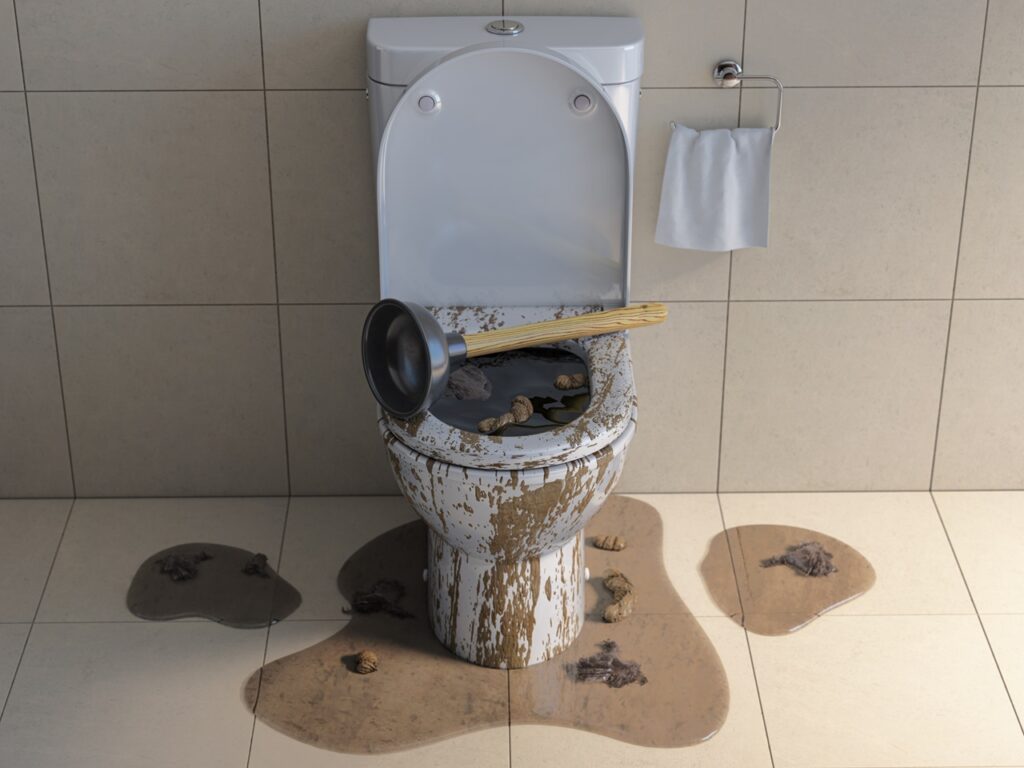
This pattern frustrates homeowners because it feels random. The toilet behaves normally one moment and spills the next. The truth sits deeper in the drain system. These overflows point to capacity limits, hidden restrictions, or aging pipe conditions that only reveal themselves under volume stress.
Understanding why this happens helps prevent serious damage and avoids repeating the same temporary fixes.
Why Normal Flushing Does Not Trigger the Overflow
A single toilet flush sends a controlled amount of water through the drain line. That volume often stays low enough to pass through partial restrictions without resistance. Even damaged pipes can handle small loads. Normal flushing works because gravity and momentum carry waste past narrowed areas before trouble builds. The drain clears quickly enough to avoid backup.
This false sense of security masks underlying problems. The system appears healthy until water demand increases.
What Heavy Water Use Changes Inside the Drain System
Showers, washing machines, dishwashers, and tubs all send sustained water flow through shared drain lines. That steady volume exposes weak points. Water stacks up behind restrictions. Flow slows. Air pressure shifts. Waste loses momentum. The system cannot recover fast enough.
Toilets sit at low points in many drain layouts. As pressure builds downstream, water seeks the easiest exit. The toilet bowl becomes the release point.
Shared Drain Lines Create Backflow Conditions
Many homes route bathroom fixtures into the same branch or main line. Heavy water use from one area affects another. A shower running for several minutes fills the line steadily. Laundry discharges large volumes quickly. That combined flow stresses pipes that already suffer from buildup, corrosion, or alignment issues.
Toilets connect directly to these shared lines. When capacity drops, toilet bowls reveal the issue first.
Partial Restrictions Cause Volume-Specific Failures
Complete blockages cause constant problems. Partial restrictions create conditional failures. Grease buildup, scale, corrosion, and debris narrow the pipe interior. Small volumes pass. Large volumes overwhelm the opening.
This explains why toilets overflow only after heavy use. The restriction never clears fully. It waits for enough pressure to push water backward.
Aging Pipes Reduce Drain Capacity Over Time
Older pipes lose internal diameter as corrosion and buildup accumulate. Cast iron develops rough surfaces. PVC collects layers of soap and grease.
Design capacity shrinks slowly. The system still works during light use. High-demand situations expose the loss. Homes built decades ago often experience this pattern first in bathrooms and laundry areas.
Airflow and Venting Add to the Problem
Proper venting balances pressure inside drain lines. Restrictions interfere with airflow. Heavy water use pulls air through limited openings. Pressure changes force water toward fixtures instead of down the pipe. Gurgling sounds often accompany this issue. Toilets react more dramatically because of their trap design.
Why Snaking Often Fails to Fix This Issue
Snaking clears a narrow path through the center of a blockage. Pipe walls remain coated. After snaking, drains improve briefly. Heavy water use recreates the problem because surface buildup still controls flow. Professional solutions focus on restoring full pipe diameter, not punching a temporary hole.
Camera Inspections Reveal the Real Cause
Camera inspections show where capacity drops. Technicians see narrowing, offsets, buildup, and structural damage. This visibility explains why problems appear only during heavy use. The footage removes guesswork and targets the true failure point. Without inspection, repairs stay reactive and incomplete.
How Surface Restoration Restores Drain Balance
Cleaning pipe walls restores velocity. Water carries waste properly again. Hydro jetting and pipe restoration methods remove buildup evenly. Flow improves across all fixtures, not just one. This approach stabilizes the system under both light and heavy use.
Why Ignoring These Overflows Leads to Bigger Damage
Repeated overflows stress fixtures, seals, and flooring. Water damage spreads quietly. Pressure continues to build with each heavy-use event. Pipe damage worsens. Small restrictions become full failures. Early action protects both the plumbing system and the home.
FAQs
Why does my toilet overflow only after showers or laundry?
Heavy water use overwhelms partial restrictions that normal flushing does not expose.
Does this mean my toilet is broken?
The toilet usually works correctly. The drain system causes the issue.
Can vent problems cause this behavior?
Restricted airflow worsens backflow during high water volume.
Will drain cleaners fix this problem?
Chemical cleaners fail to restore pipe capacity and often worsen damage.
How do professionals diagnose this issue?
Camera inspections reveal restrictions, buildup, and pipe alignment problems.
Toilet overflows after heavy water use signal deeper drain issues. Call We Fix Drains at 407-426-9955 for expert diagnosis across Orlando.