


Transition Couplers Done Right: Connecting Lined Cast Iron to PVC Without Leaks
Connecting a newly lined cast iron pipe to a section of PVC sounds simple. The wrong coupler, a sloppy cut, or loose bands turn that “simple” job into repeat leaks, sewer odors, and callbacks. This guide lays out a clean, field-proven process for leak-free transitions that hold up in Orlando’s sandy soils and high water table. You’ll see what type of coupling to buy, how to measure after lining, and how to install and test the joint so it stays tight.
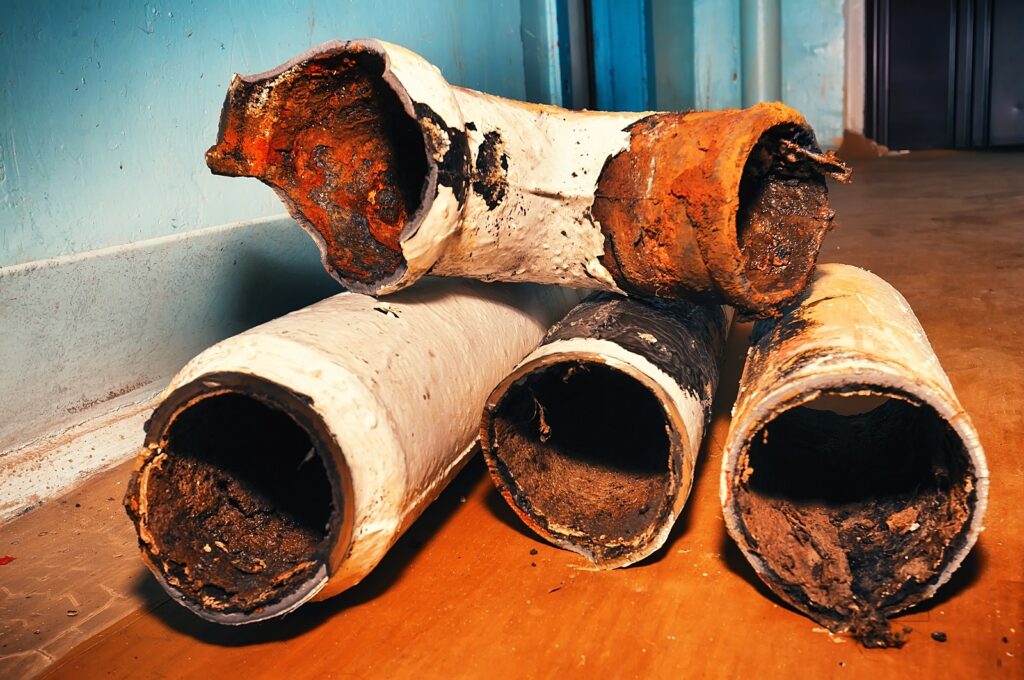
Why transition joints leak in the first place
Most failures start with assumptions. A cured-in-place (CIPP) liner changes pipe dimensions. The host cast iron may be out of round. PVC sits perfectly round. A generic rubber sleeve without a shear band won’t bridge those differences. Soil movement adds side-load and twists the joint. Result: weeps now, root intrusion later, and a full failure when the ground shifts again.
What a transition coupler must do?
A proper transition coupler does three jobs at once:
- Seals the interface between dissimilar materials and slightly different outside diameters.
- Resists shear from settlement and traffic with a stainless steel shield that spreads the load.
- Centers the pipe ends so the liner, cast iron, and PVC stay aligned under flow and movement.
For cast iron-to-PVC, use a shielded, stainless-band transition coupling (often called a no-hub or shielded mission-style coupling). Plain unshielded sleeves work on temporary pumps and vents; they do not protect buried or slab transitions.
Measure first: linear changes the math
Do not guess the size. Measure both sides after prep.
- Cast iron (lined) OD: Clean the exterior, then measure with a caliper or wrap tape. Lining reduces the inside diameter but can also change the outside profile at the cut. Check two axes to catch ovality.
- PVC OD: Use the actual pipe you’ll install (e.g., 3″ or 4″ schedule).
- Select the coupling that lists both OD ranges on its label. Look for a model specifically rated “CI ↔ PVC” with a stainless shear band and multiple clamps.
Tip: For service tees or stacks, consider a donut/compression gasket only when the hub and liner geometry match the gasket spec. Most lateral transitions do better with a shielded coupling.
Prep that prevents call-backs
Great couplers won’t save a bad prep. Work in this order:
- Expose and support. Shore the trench or create clean slab access. Add temporary hangers so the joint sits neutral, not in a bind.
- Square cuts, clean edges. Cut cast iron with a chain cutter or diamond blade. Cut PVC with a fine-tooth saw. Bevel the PVC spigot end so it won’t bite the rubber.
- Deburr and wipe. Remove burrs and dust. Wipe both pipe ends and the coupling sleeve with a clean rag. Keep oil and primer off the rubber.
- Dry fit. Slide the coupling over the lined cast iron first, then insert the PVC. Center the joint so equal lengths sit under the shield.
Install like a pro: clamp sequence and torque
Follow the manufacturer’s pattern to tighten bands evenly:
- Tighten in sequence. Work from the center bands outward, then cross-check.
- Use a torque wrench. Hit the specified value on each band. Many shielded couplers call for 60 in-lb, though some specify 80 in-lb. Read the label and match it.
- Re-torque. Wait a few minutes, then re-check each band. Rubber relaxes; that second pass locks the seal.
Support, backfill, and slab reinstatement
A tight clamp can still fail without support:
- Add permanent support. Use hangers for overhead work or compacted bedding for buried lines. The joint must not carry the span.
- Backfill in lifts. In trenches, place and compact sand or fine fill in 6–8″ lifts around the joint. Keep the rock away from the coupling.
- Reinstate slabs. Under a slab, set a gravel base, a vapor barrier, and concrete per local standards so the pipe won’t pick up slab load.
Proof test before you call it done
Test builds confidence and avoids returns:
- Water test. Fill the line and observe the joint under static head. Mark any weeps and re-torque.
- Camera check. Run a camera to confirm alignment and a smooth bore. No shelf, no lip, no snag points.
- Flow test. Flush several fixtures at once to simulate real use. Watch for movement at the joint.
Common mistakes (and easy fixes)
- Unshielded sleeves. Swap them for shielded couplers with a shear band.
- Wrong size range. Return it and buy the model that lists both ODs.
- No bevel on PVC. Bevel it to protect the gasket and ease insertion.
- No support. Add hangers or compact the bedding so the joint stays neutral.
- Skipped torque. Use the right tool and hit spec on every band.
Orlando-specific tips that pay off
Central Florida’s sandy soils shift after heavy rain. The water table rises fast. Driveways and pavers settle. Build joints that handle side-load:
- Choose shielded couplers with full-length shear bands.
- Compact bedding tightly around the fitting.
- Keep cleanouts accessible for quick checks after storms.
- Protect shallow transitions under driveways with a sleeve or encasement and a solid base.
When a transition needs more than a coupler
A coupler fixes the joint; it can’t fix a collapsing run. Severe ovality, heavy scale, or fractures near the cut call for short-run lining, pipe bursting, or sectional repair before you set the coupler. Solve the structural issue first, then make the transition.
FAQs: Transition Couplers for Lined Cast Iron to PVC
1) Do shielded couplers hold up in sandy Orlando soil?
Yes. The stainless shear band spreads load and resists side-shift from sandy backfill and seasonal movement.
2) Can I reuse an old unshielded rubber sleeve after lining?
No. Lining changes dimensions. Use a new shielded coupling sized to the measured ODs.
3) How tight should I set the clamps on the coupling?
Match the label torque. Many call for 60 in-lb. Use a torque wrench and re-check after a few minutes.
4) Will the joint leak under my driveway?
A shielded coupler, proper bedding, and compaction protect the joint. Add a sleeve or encasement for shallow runs under load.
5) Do I need a camera inspection after the transition?
Yes. A quick camera pass confirms alignment, a smooth bore, and a clean seal before you cover the work.
Need a rock-solid connection from lined cast iron to PVC? We Fix Drains installs shielded transition couplers the right way and tests every joint. Call 407-426-9955 for fast service in Orlando, FL and surrounding areas.